Tất cả 78 lá
Cỗ Xe
Tên tiếng Anh: The Chariot
- Nhóm
- Ẩn Chính
- Nguyên tố
- Nước
- Hành tinh
- Mặt Trăng
- Cung hoàng đạo
- Cự Giải
- Có hay Không
- xuôi: Có, ngược: Không
Nghĩa xuôi
quyết tâm, sự tiến lên, chiến thắng, tự chủ
Cỗ Xe cho thấy bạn đang có đủ sức mạnh ý chí để vượt qua trở ngại. Khi bạn giữ vững hướng đi và điều khiển được những mong muốn trái chiều bên trong, thành công sẽ đến gần. Đây là lúc tiến lên với sự tập trung và tự tin.
Nghĩa ngược
mất phương hướng, thiếu kiểm soát, sự trì trệ, xung đột nội tâm
Ở chiều ngược, bạn có thể đang bị kéo về nhiều hướng cùng lúc và cảm thấy mất lái. Có thể bạn đang cố ép mọi thứ đi quá nhanh. Hãy dừng lại để xác định mình thật sự muốn đi đâu.
Lời khuyên: Hãy giữ chặt tay lái và tập trung vào một hướng đi duy nhất.
Theo Waite (1911)
- Xuôi
- Succour, providence also war, triumph, presumption, vengeance, trouble.
- Ngược
- Riot, quarrel, dispute, litigation, defeat.
Tình cảm, công việc và nội tâm
Theo Tarotoo, giữ nguyên tiếng Anh.
- Tình cảm
- Xuôi: pursuing love, relationship progress, shared direction, overcoming romantic obstacles
- Ngược: loss of direction, opposing goals, romantic obstacles, lack of control
- Công việc
- Xuôi: ambition, focused progress, overcoming competition, taking control of your career
- Ngược: scattered forces, stalled ambition, loss of control, aggressive competition
- Tinh thần
- Xuôi: spiritual determination, directing inner forces, disciplined progress, mastery through focus
- Ngược: loss of direction, undisciplined will, scattered energy, inner conflict
Đoạn trích nguồn
Các đoạn trích được giữ nguyên ngôn ngữ gốc để trích dẫn chính xác.
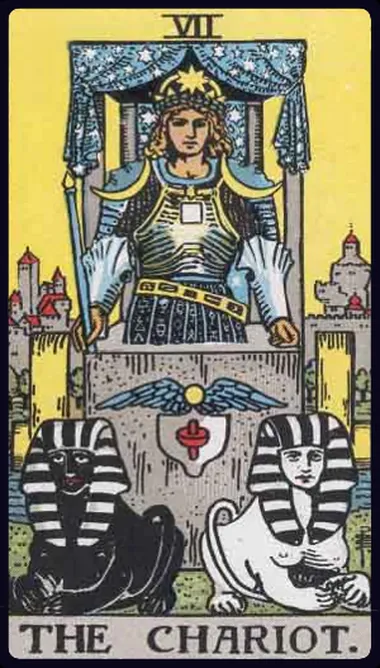
VII The Chariot An erect and princely figure carrying a drawn sword and corresponding, broadly speaking, to the traditional description which I have given in the first part. On the shoulders of the victorious hero are supposed to be the Urim and Thummim. He has led captivity captive; he is conquest on all planes--in the mind, in science, in progress, in certain trials of initiation. He has thus replied to the sphinx, and it is on this account that I have accepted the variation of Éliphas Lévi; two sphinxes thus draw his chariot. He is above all things triumph in the mind. It is to be understood for this reason (a) that the question of the sphinx is concerned with a Mystery of Nature and not of the world of Grace, to which the charioteer could offer no answer; (b) that the planes of his conquest are manifest or external and not within himself; (c) that the liberation which he effects may leave himself in the bondage of the logical understanding; (d) that the tests of initiation through which he has passed in triumph are to be understood physically or rationally; and (e) that if he came to the pillars of that Temple between which the High Priestess is seated, he could not open the scroll called Tora, nor if she questioned him could he answer. He is not hereditary royalty and he is not priesthood.