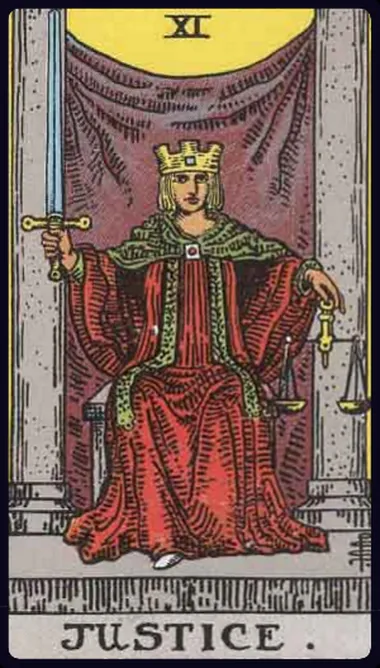
Tất cả 78 lá
Công Lý
Tên tiếng Anh: Justice
- Nhóm
- Ẩn Chính
- Nguyên tố
- Khí
- Hành tinh
- Sao Kim
- Cung hoàng đạo
- Thiên Bình
- Có hay Không
- xuôi: Có thể, ngược: Không
Nghĩa xuôi
sự công bằng, sự thật, trách nhiệm, nhân quả
Công Lý nhắc rằng mọi hành động đều có hệ quả. Lá bài khuyến khích bạn nhìn sự việc một cách khách quan, trung thực và đưa ra quyết định công bằng. Những gì bạn làm đúng đắn sẽ được ghi nhận.
Nghĩa ngược
sự bất công, né tránh trách nhiệm, thiếu trung thực, thiên lệch
Ở chiều ngược, có thể bạn đang cảm thấy mình bị đối xử chưa công bằng, hoặc đang né tránh một phần trách nhiệm của mình. Hãy nhìn lại sự việc thật thà nhất có thể. Sự rõ ràng sẽ giúp bạn nhẹ lòng hơn.
Lời khuyên: Hãy hành động trung thực và nhận phần trách nhiệm thuộc về mình.
Theo Waite (1911)
- Xuôi
- Equity, rightness, probity, executive; triumph of the deserving side in law.
- Ngược
- Law in all its departments, legal complications, bigotry, bias, excessive severity.
Tình cảm, công việc và nội tâm
Theo Tarotoo, giữ nguyên tiếng Anh.
- Tình cảm
- Xuôi: honesty, relationship balance, accountability, fair decisions in love
- Ngược: dishonesty, imbalance, avoided accountability, unfairness
- Công việc
- Xuôi: fair evaluation, contracts and legal matters, accountable decisions, merit-based outcome
- Ngược: unfair outcome, dishonest dealings, avoided responsibility, bias
- Tinh thần
- Xuôi: spiritual accountability, cause and effect, ethical alignment, balancing actions and consequences
- Ngược: avoided accountability, imbalance, dishonesty with the self, unresolved consequences
Đoạn trích nguồn
Các đoạn trích được giữ nguyên ngôn ngữ gốc để trích dẫn chính xác.
XI Justice As this card follows the traditional symbolism and carries above all its obvious meanings, there is little to say regarding it outside the few considerations collected in the first part, to which the reader is referred. It will be seen, however, that the figure is seated between pillars, like the High Priestess, and on this account it seems desirable to indicate that the moral principle which deals unto every man according to his works--while, of course, it is in strict analogy with higher things;--differs in its essence from the spiritual justice which is involved in the idea of election. The latter belongs to a mysterious order of Providence, in virtue of which it is possible for certain men to conceive the idea of dedication to the highest things. The operation of this is like the breathing of the Spirit where it wills, and we have no canon of criticism or ground of explanation concerning it. It is analogous to the possession of the fairy gifts and the high gifts and the gracious gifts of the poet: we have them or have not, and their presence is as much a mystery as their absence. The law of Justice is not however involved by either alternative. In conclusion, the pillars of Justice open into one world and the pillars of the High Priestess into another.