Tất cả 78 lá
Người Treo Ngược
Tên tiếng Anh: The Hanged Man
- Nhóm
- Ẩn Chính
- Nguyên tố
- Nước
- Hành tinh
- Sao Hải Vương
- Cung hoàng đạo
- Song Ngư
- Có hay Không
- xuôi: Có thể, ngược: Không
Nghĩa xuôi
sự tạm dừng, buông bỏ, góc nhìn mới, sự chấp nhận
Người Treo Ngược mời bạn tạm dừng và nhìn mọi việc từ một góc khác. Đôi khi buông tay lại giúp ta thấy rõ hơn là cố nắm giữ. Khoảng chờ này không phải là lãng phí mà là thời gian để hiểu ra điều quan trọng.
Nghĩa ngược
sự trì hoãn, kháng cự, hy sinh vô ích, mắc kẹt
Khi đảo ngược, bạn có thể đang mắc kẹt vì cứ chờ đợi mà không quyết định. Cũng có thể bạn đang hy sinh quá nhiều mà không nhận lại điều gì. Hãy hỏi mình điều gì cần được buông xuống để bước tiếp.
Lời khuyên: Hãy thử nhìn vấn đề từ phía ngược lại trước khi hành động.
Theo Waite (1911)
- Xuôi
- Wisdom, circumspection, discernment, trials, sacrifice, intuition, divination, prophecy.
- Ngược
- Selfishness, the crowd, body politic.
Tình cảm, công việc và nội tâm
Theo Tarotoo, giữ nguyên tiếng Anh.
- Tình cảm
- Xuôi: romantic pause, changing perspective, emotional surrender, waiting for clarity
- Ngược: stalling, resistance, needless sacrifice, indecision
- Công việc
- Xuôi: career pause, delayed progress, new perspective, reconsidering professional priorities
- Ngược: stalled progress, resistance to change, wasted delay, indecision
- Tinh thần
- Xuôi: surrender, altered perspective, spiritual pause, releasing attachment to control
- Ngược: resisting surrender, stalled growth, martyrdom, clinging to control
Đoạn trích nguồn
Các đoạn trích được giữ nguyên ngôn ngữ gốc để trích dẫn chính xác.
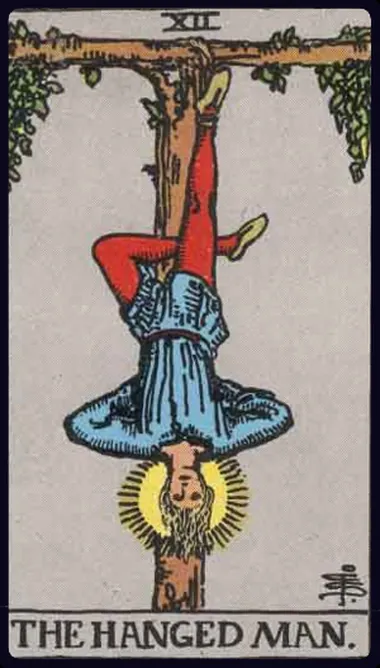
XII The Hanged Man The gallows from which he is suspended forms a Tau cross, while the figure--from the position of the legs--forms a fylfot cross. There is a nimbus about the head of the seeming martyr. It should be noted (1) that the tree of sacrifice is living wood, with leaves thereon; (2) that the face expresses deep entrancement, not suffering; (3) that the figure, as a whole, suggests life in suspension, but life and not death. It is a card of profound significance, but all the significance is veiled. One of his editors suggests that Éliphas Lévi did not know the meaning, which is unquestionable nor did the editor himself. It has been called falsely a card of martyrdom, a card a of prudence, a card of the Great Work, a card of duty; but we may exhaust all published interpretations and find only vanity. I will say very simply on my own part that it expresses the relation, in one of its aspects, between the Divine and the Universe. He who can understand that the story of his higher nature is imbedded in this symbolism will receive intimations concerning a great awakening that is possible, and will know that after the sacred Mystery of Death there is a glorious Mystery of Resurrection.